Traditional, Victorian and European classic furniture differ in origin, ornament and scale. Traditional is a broad modern category built on 18th- and 19th-century English and French design. Victorian is one period, 1837 to 1901, known for dark wood, deep carving and button tufting. European classic covers the older court styles of France and Italy: Baroque, Rococo and Neoclassical. For a retailer, the three names describe three different customers.
The difference in one line each:
- Traditional: balanced, symmetrical and comfortable, with restrained detail.
- Victorian: dark, heavy and richly decorated, with tufted upholstery.
- European classic: formal and palatial, with carved frames, curves and gilded or metallic finishes.
The 3 Styles Side by Side
| Traditional | Victorian | European classic | |
|---|---|---|---|
| Origin | 18th–19th century England and France, as reinterpreted today | Britain, 1837–1901 | Italy and France, 17th–18th century |
| Shape | Symmetrical, gentle curves, rolled arms | Rounded backs, heavy proportions | Scrolled arms, cabriole legs, crested backs |
| Ornament | Moderate: turned legs, nailhead trim, piping | Heavy: carved fruit, flowers and leaves | Heaviest: carved shells, scrolls and acanthus leaves |
| Wood and finish | Cherry, mahogany and walnut tones | Dark mahogany, walnut and rosewood | Gold, silver, champagne and antique white finishes |
| Upholstery | Damask, chenille, leather, muted patterns | Velvet, button tufting, fringe | Velvet, jacquard and brocade with accent pillows |
| Feel | Warm and familiar | Rich and nostalgic | Grand and formal |
Retailers stock all three as complete rooms, most often as living room sets and formal dining sets.
What Traditional Furniture Is
Traditional furniture is a present-day style that borrows its shapes from 18th- and 19th-century English and French pieces, such as Queen Anne, Chippendale and Sheraton designs. It keeps their symmetry and proportions and tones down their ornament. The result looks classic without looking like an antique.
You can identify a traditional piece by 4 features:
- Symmetry: matching arms, centered backs, and sets designed in pairs.
- Soft curves: rolled arms, camel backs and turned or gently curved legs.
- Wood tones: medium to dark stains that show the grain.
- Restrained detail: nailhead trim, welting and skirted bases instead of deep carving.
Traditional is the widest of the three categories. It sells to customers who want a formal room that is still easy to live in.
What Victorian Furniture Is
Victorian furniture is the furniture made during the reign of Queen Victoria, from 1837 to 1901, and modern pieces made in that manner. It is not one single design. Victorian makers revived earlier styles, mainly Gothic, Rococo and Renaissance, and factories made decorated furniture affordable for the middle class for the first time. The Victoria and Albert Museum in London holds one of the largest collections of furniture from the period.
The common thread across those revivals is abundance. A Victorian piece shows these features:
- Dark wood: mahogany, walnut and rosewood with a deep polish.
- Carving: flowers, fruit, leaves and scrolls on crests, arms and legs.
- Button tufting: deep-buttoned backs on sofas, chairs and headboards.
- Curved outlines: balloon backs, serpentine fronts and rounded seats.
- Rich fabric: velvet and patterned upholstery, often with fringe or tassels.
Victorian furniture sells to customers who want a room with history and drama: a parlor, a formal sitting room or a statement bedroom.
What European Classic Furniture Is
European classic furniture follows the court styles of continental Europe in the 17th and 18th centuries. Three periods supply most of the vocabulary:
- Baroque (17th century): began in Italy and reached its height in the France of Louis XIV. Baroque furniture is massive, symmetrical and heavily carved, with gilding and bold scrolls.
- Rococo (early to mid 18th century): the style of Louis XV. Rococo is lighter and more playful, with asymmetrical carving, shell motifs and the S-curved cabriole leg.
- Neoclassical (late 18th century): the style of Louis XVI. Neoclassical furniture returns to straight lines, with tapered and fluted legs and motifs taken from ancient Greece and Rome.
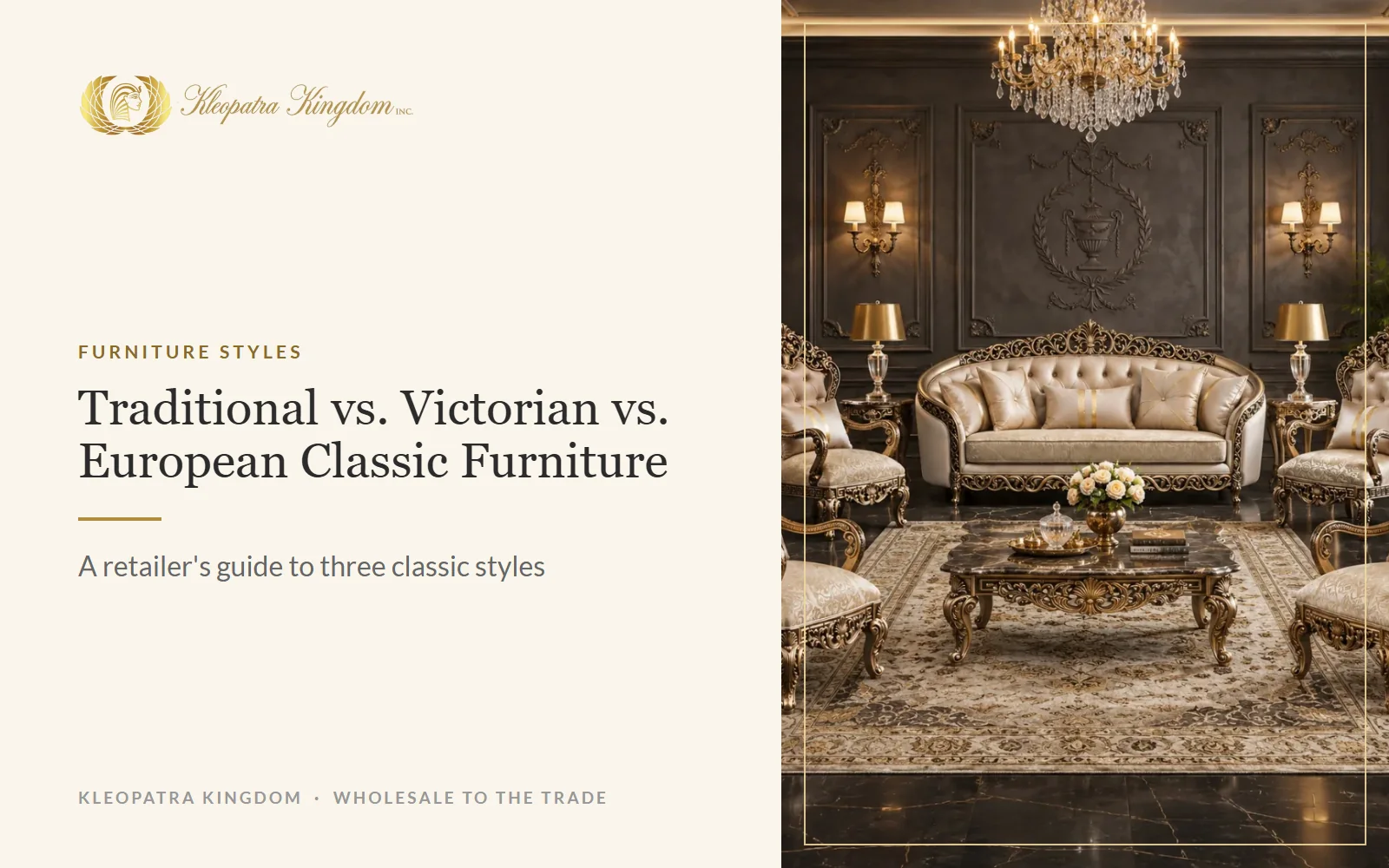
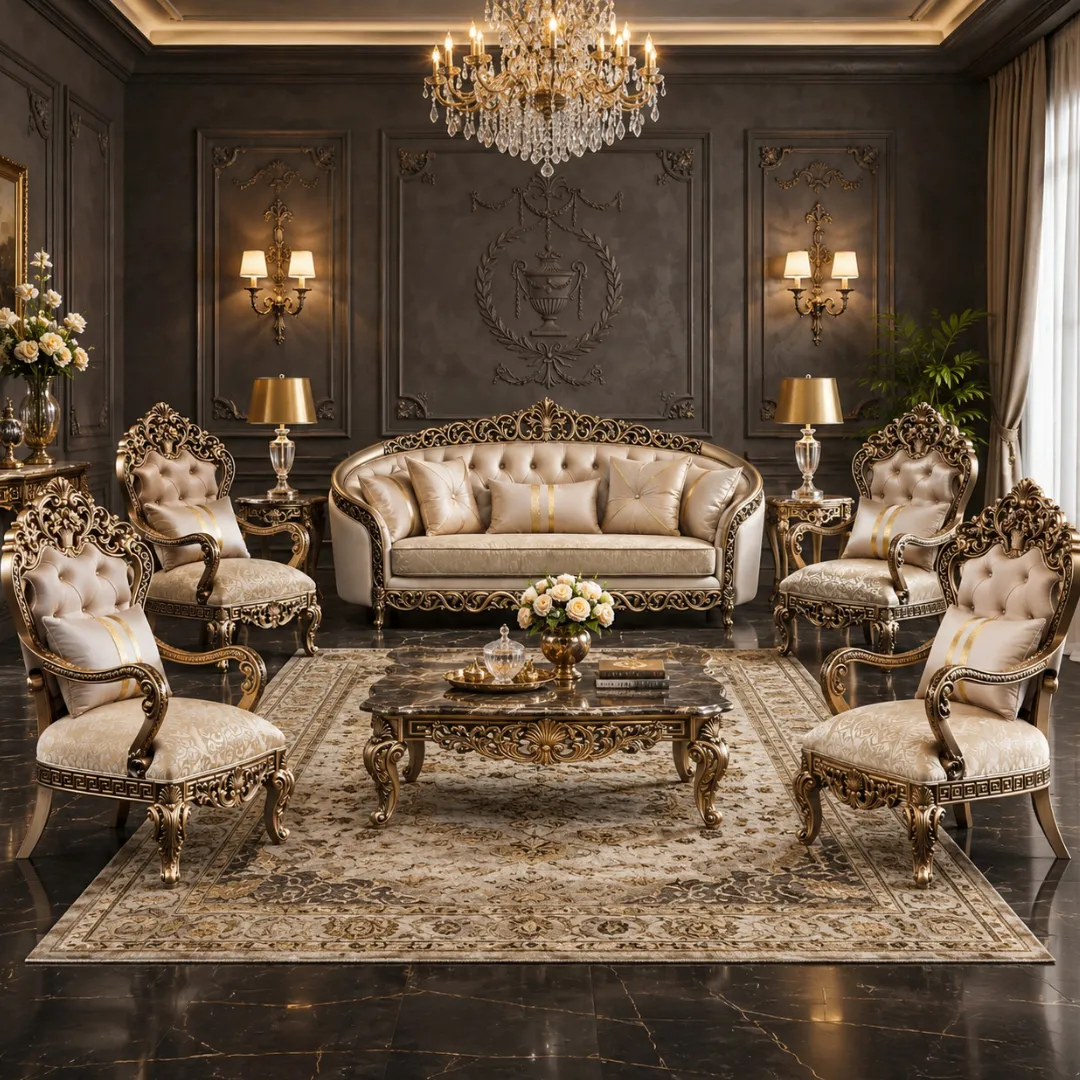
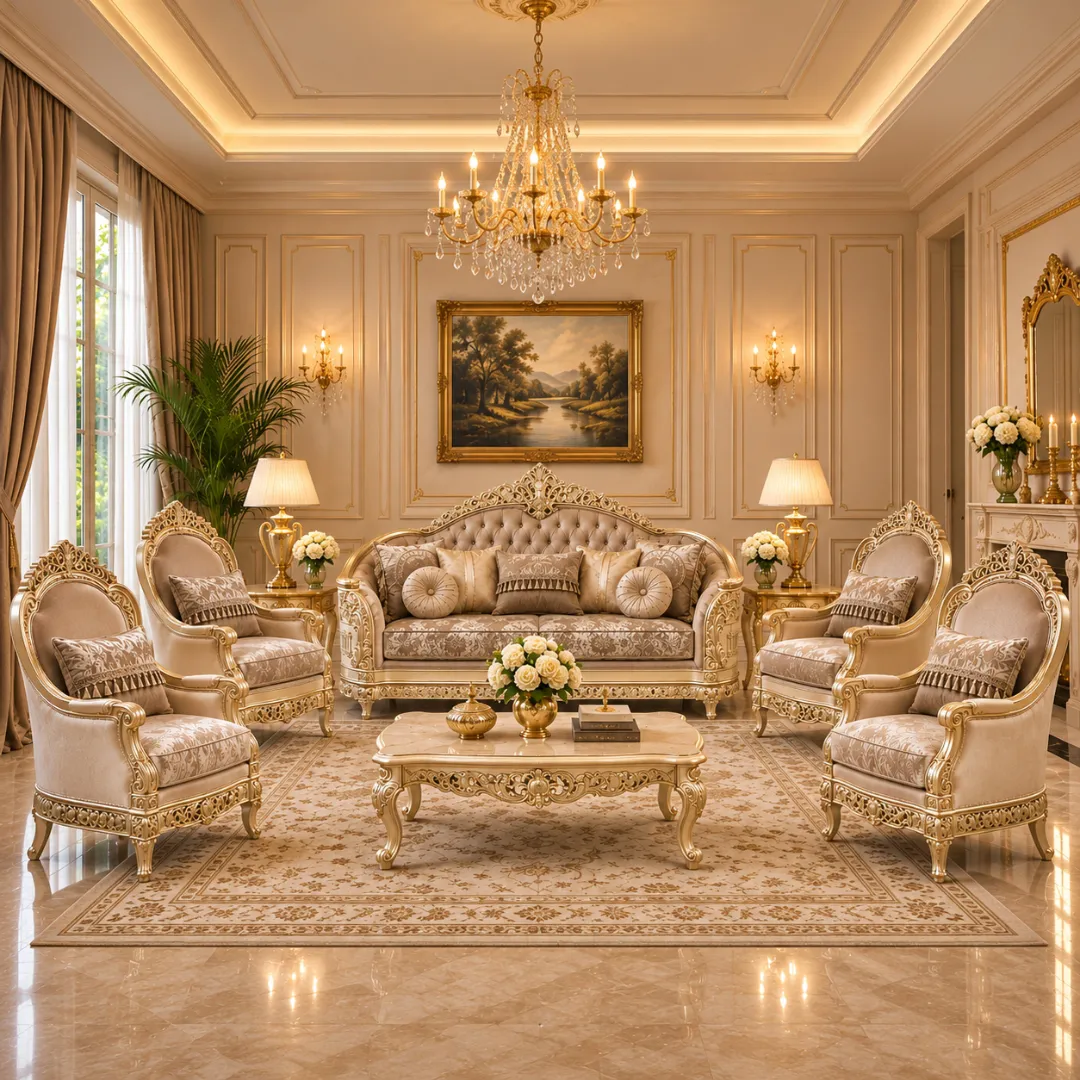
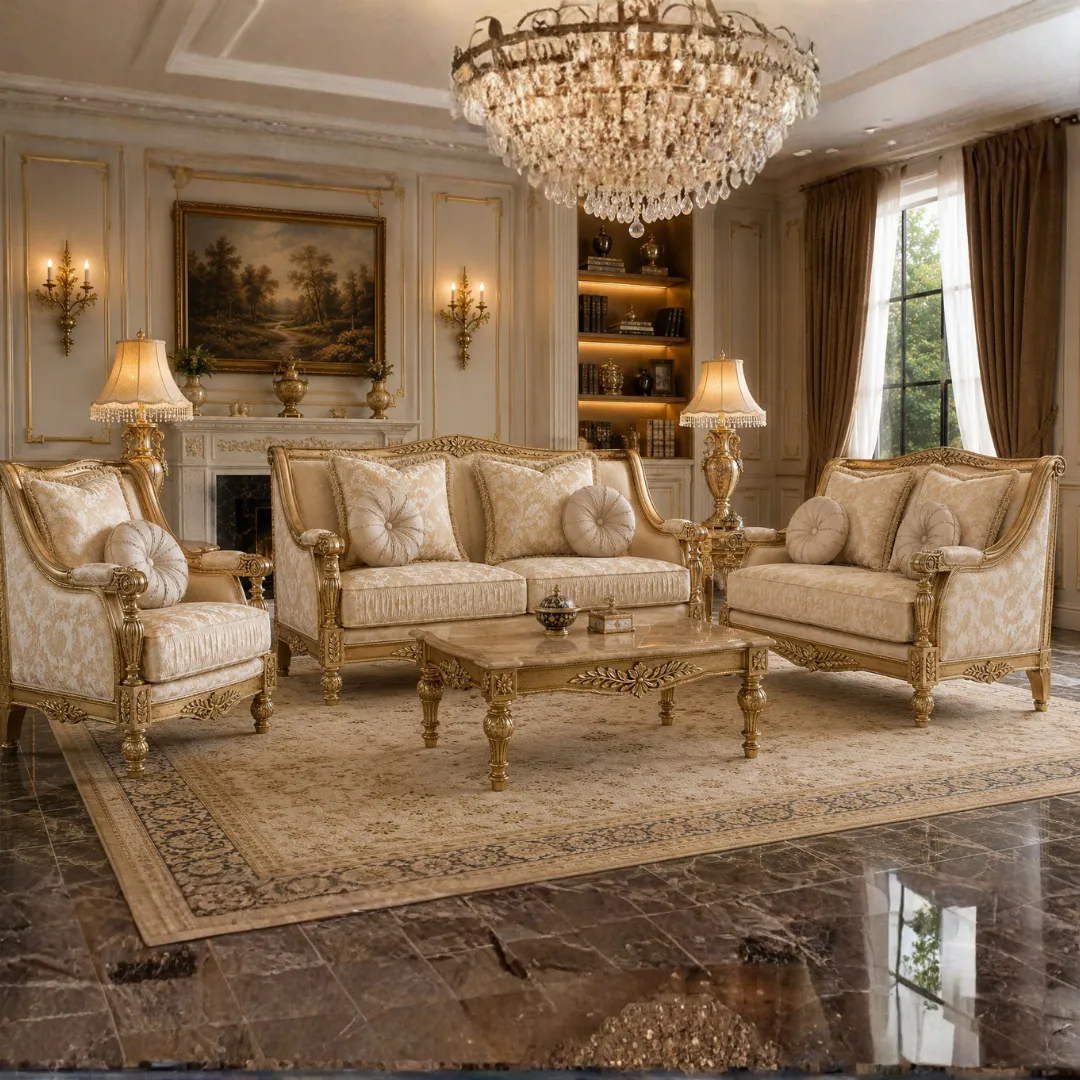
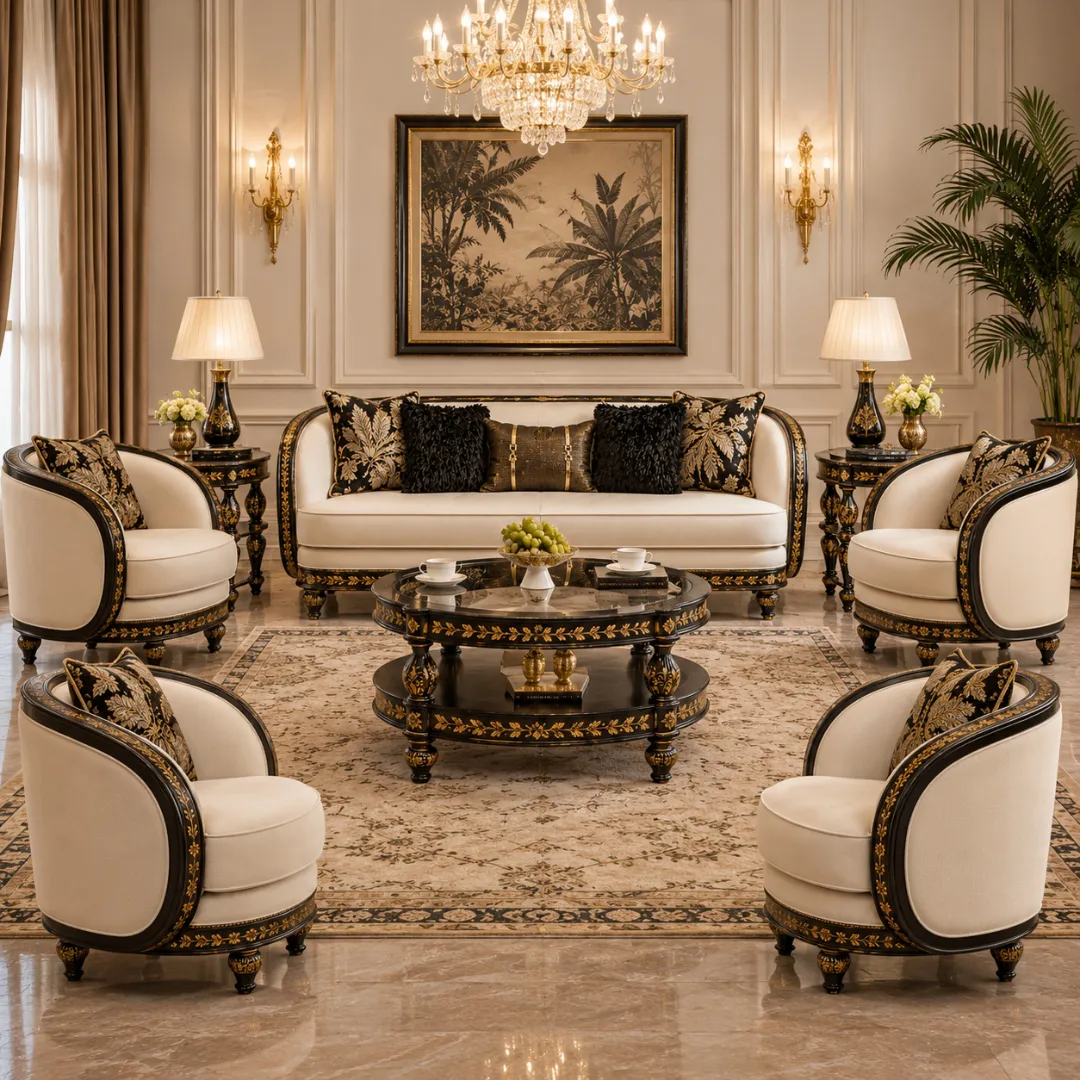
Modern European classic collections combine these sources. The typical piece has a carved, exposed wood frame, a crested back, scrolled arms and a metallic or antique-white finish, upholstered in velvet or jacquard and dressed with accent pillows. It is the most formal of the three styles and the one customers describe as “luxury” or “palace” furniture.
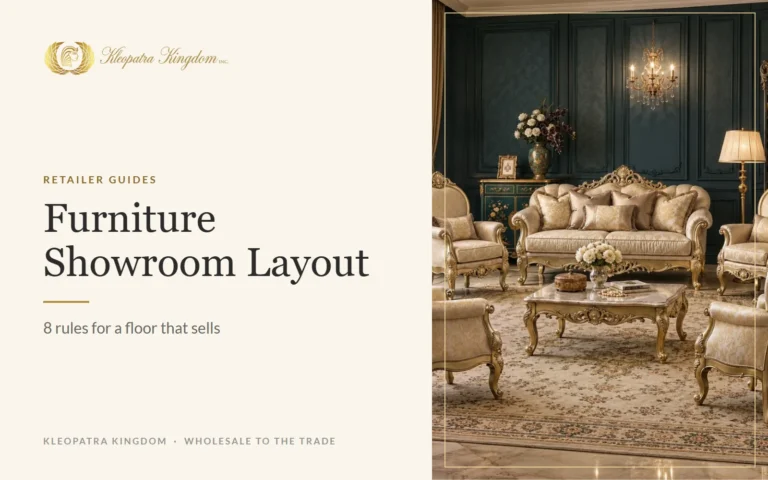
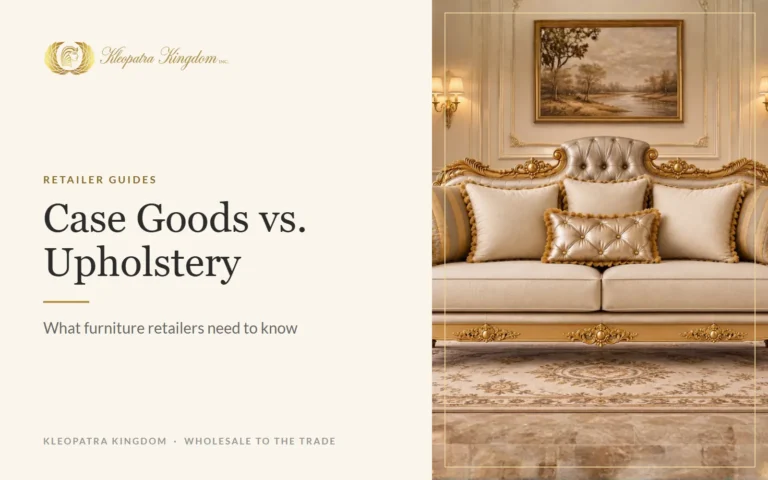
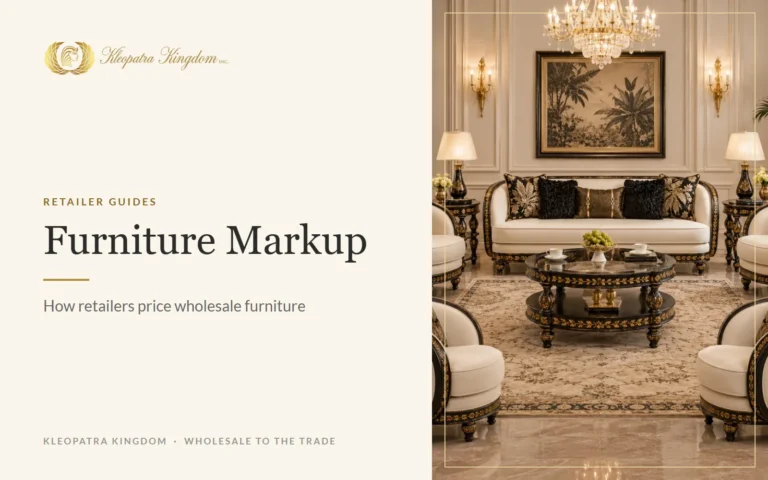
Three living room sets from our catalog show the three court styles:
Where the 3 Styles Overlap
The three styles share one family tree, which is why shoppers mix up the names. Victorian makers copied Rococo and Renaissance pieces. Traditional design simplifies both. A carved, tufted sofa can honestly be called Victorian by one customer and European by another.
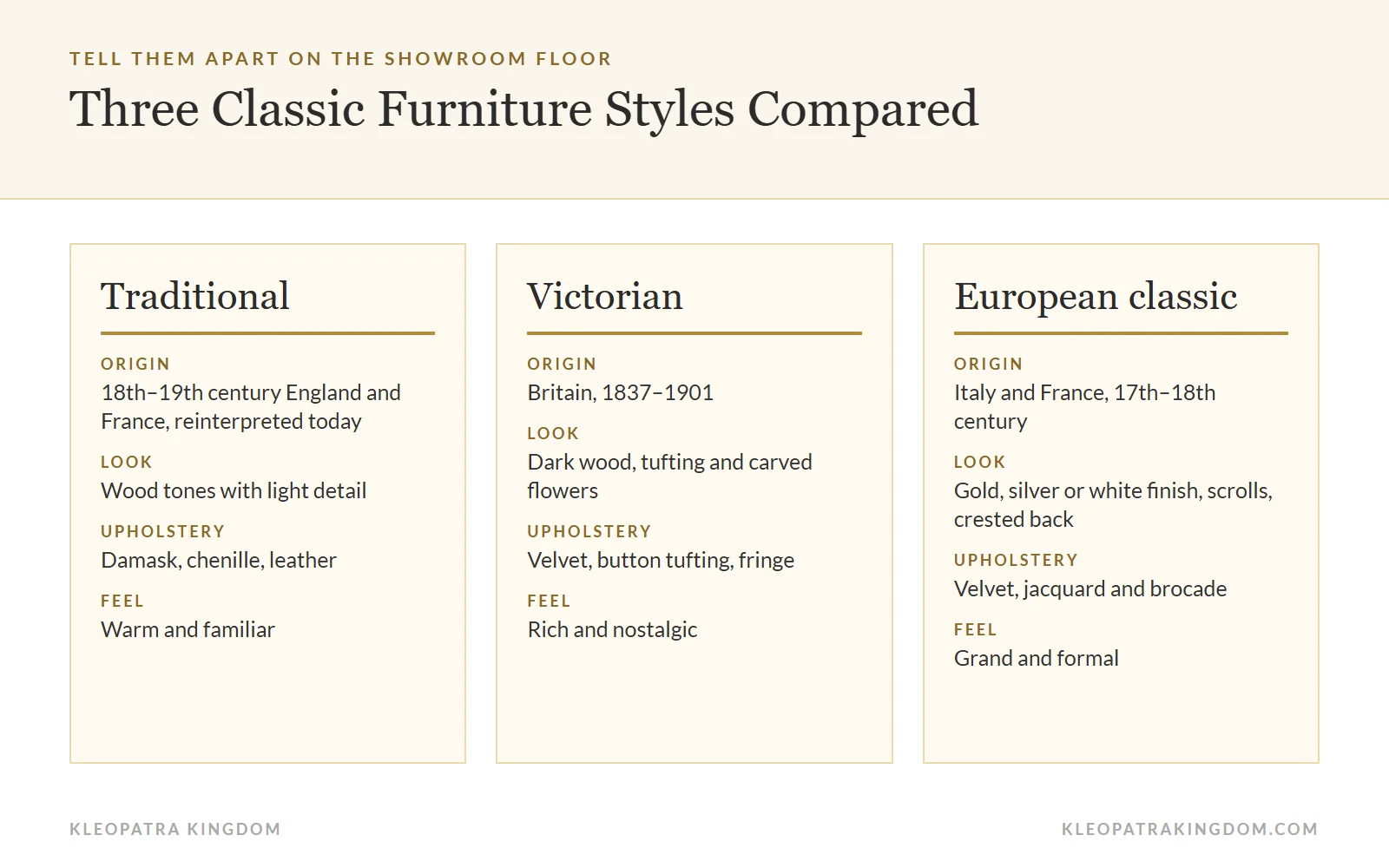
Use ornament and finish to tell them apart on the floor:
- Wood tones with light detail: traditional.
- Dark wood with tufting and carved flowers: Victorian.
- Gold, silver or white finish with scrolls and a crested back: European classic.
Which Customer Buys Each Style
| Style | Typical customer | Rooms that sell |
|---|---|---|
| Traditional | Wants a classic home that feels comfortable every day | Family living rooms, dining rooms |
| Victorian | Loves period character and rich color | Formal sitting rooms, bedrooms |
| European classic | Wants the room to make a statement to guests | Formal living rooms, formal dining rooms |
Formal styles are bought for the rooms where families receive guests. That is why they sell as complete sets: a customer who chooses a carved sofa wants the matching loveseat and chair, and a customer who chooses a formal dining table wants the chairs and the buffet with it.
How to Present Each Style in a Showroom
- Show the full set. Display a living room collection as a 3-piece sofa set with its tables, and a dining collection as a 7-piece set with its buffet. Formal furniture is judged as a room.
- Keep styles apart. Give each style its own vignette. A gold-finished European sofa beside a plain traditional recliner weakens both.
- Light the detail. Aim light across carved frames and tufted backs. Carving that sits in shadow reads as flat.
- Name the style on the tag. Customers search online by style name before they visit. A tag that says “Victorian” or “European classic” confirms they found what they came for.
- Use accent pieces to link rooms. An accent chair or a console table in the same finish carries a collection from the living room into the entry or the dining room.
For the floor plan itself, see our guide to furniture showroom layout.
That is how the styles differ and how to sell them. The answers below settle the points customers raise on the floor.
Frequently Asked Questions
Is Victorian furniture the same as antique furniture?
No. Victorian describes a style and a period, 1837 to 1901. Antique describes age, usually 100 years or more. An original Victorian chair is an antique. A new chair built with a tufted back, carved crest and dark finish is Victorian in style, and it is sold as new furniture.
What is the difference between Baroque and Rococo furniture?
Baroque furniture, from the 17th century, is heavy, symmetrical and architectural, with bold carving and gilding. Rococo furniture, from the early to mid 18th century, is lighter and curved, with asymmetrical ornament, shell motifs and cabriole legs. Baroque suits large formal rooms. Rococo reads as more graceful and decorative.
Can traditional and Victorian furniture be used in one room?
Yes, when the wood tones match. A traditional sofa set pairs well with one Victorian accent piece, such as a tufted chair or a carved console table. Use the heavier style for one or two statement pieces only. Mixing full sets from both styles makes a room look crowded.
Which of the three styles is the most formal?
European classic is the most formal, because of its carved crests, metallic finishes and palace proportions. Victorian comes second, with dark wood and tufted upholstery. Traditional is the most relaxed of the three and fits everyday family rooms, which is why it sells to the widest group of customers.
Classic Styles at Kleopatra Kingdom
Kleopatra Kingdom is a trade-only wholesaler, and our living room collections follow European classic furniture design: Baroque, Rococo and Neoclassical. Retailers can browse living room sets, sofas and armchairs, then open a trade account to see wholesale pricing.
New to buying wholesale? Start with how to choose a wholesale furniture supplier.