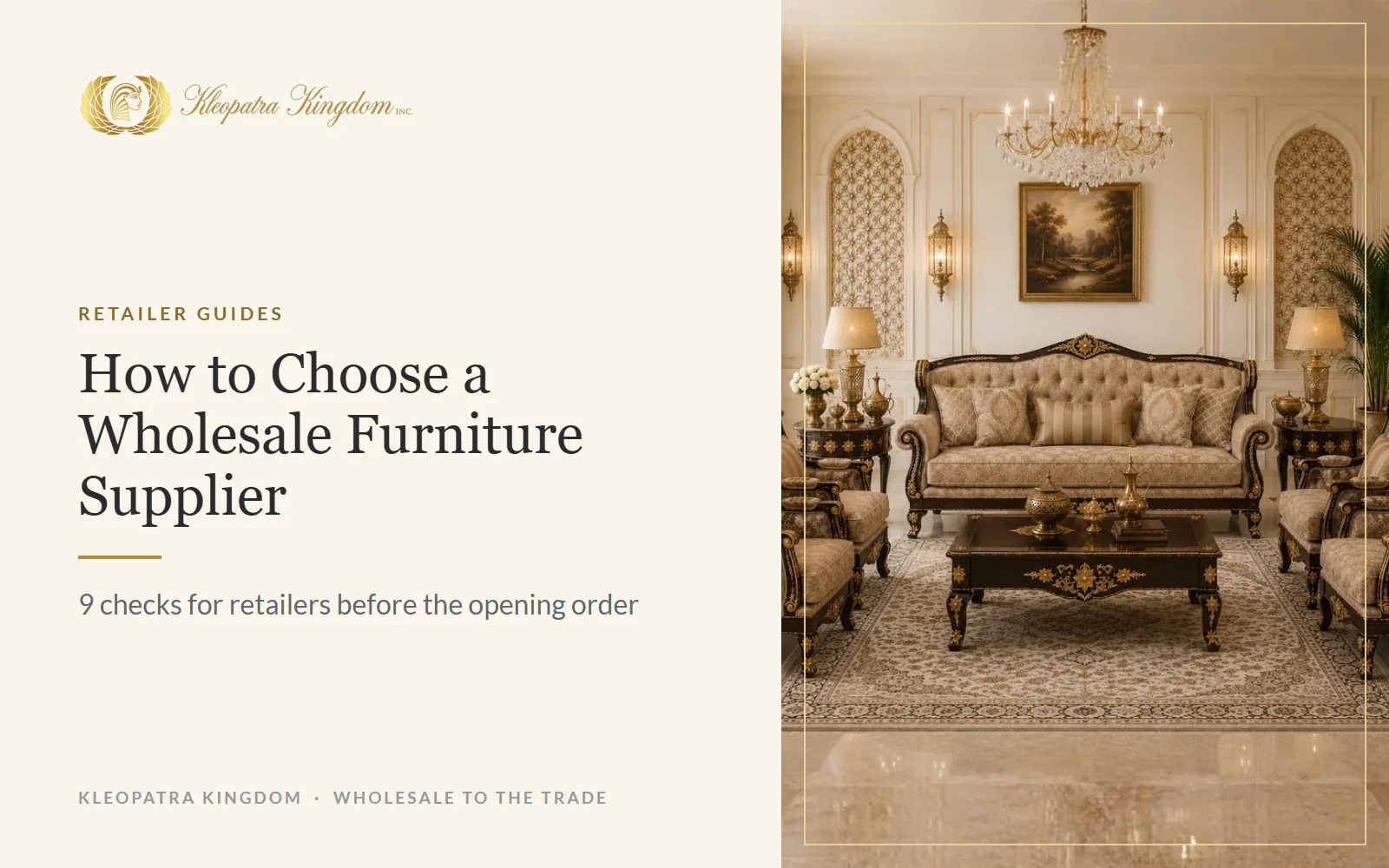
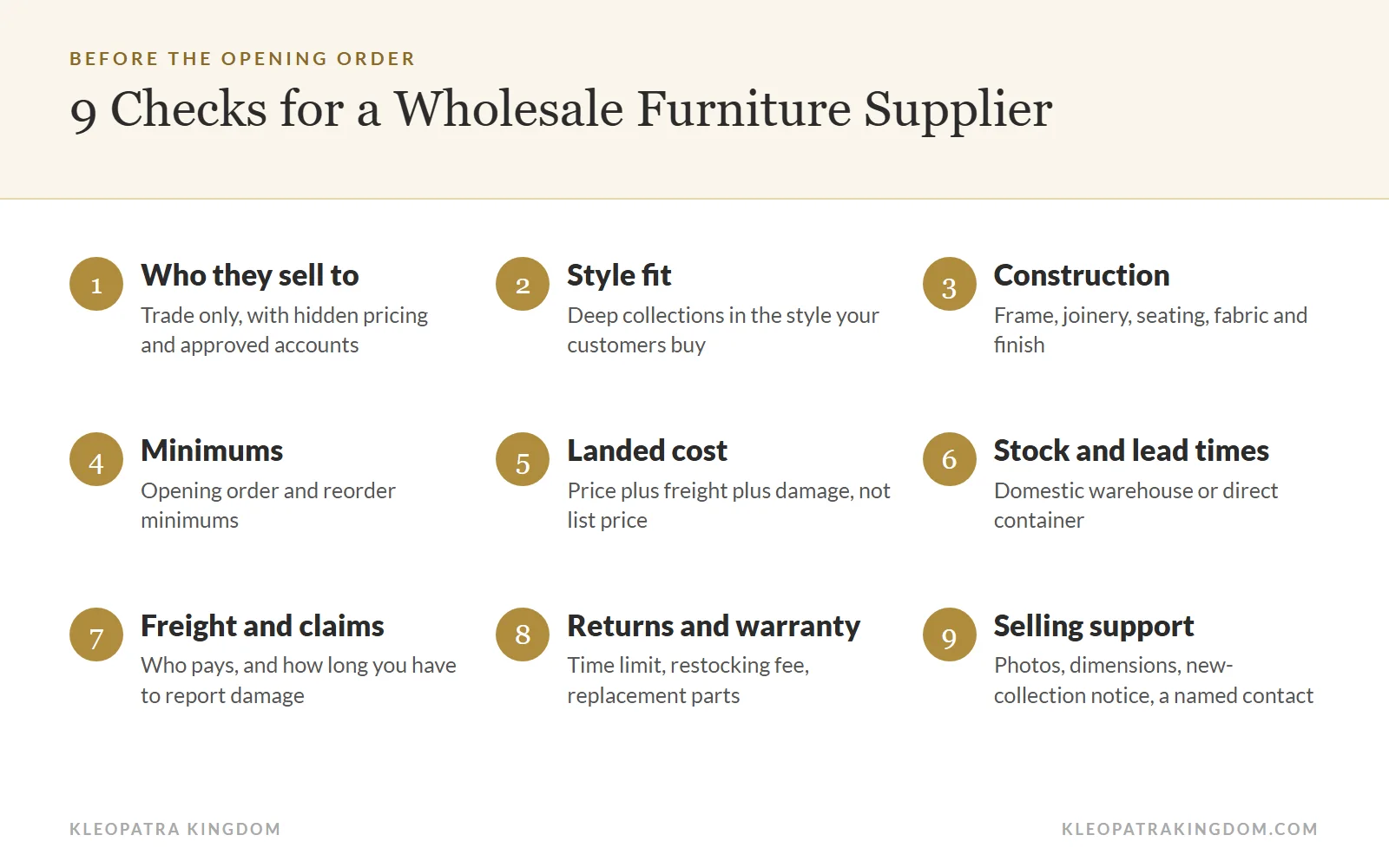
To choose a wholesale furniture supplier, check 9 things before you place an opening order: who the supplier sells to, style fit, construction, minimums, pricing, stock and lead times, freight and damage claims, after-sale policies, and selling support. A supplier that passes all 9 protects your margin and keeps your showroom floor full. A supplier that fails on 2 or 3 costs you sales that no discount recovers.
The short version:
- Pick suppliers that sell to the trade only, so you never compete with your own vendor.
- Judge the furniture on frame, joinery and fabric, not on the catalog photo.
- Compare landed cost (price + freight + damage rate), not the price on the sheet.
- Get minimums, lead times and the claims process in writing before the first order.
1. Check Who the Supplier Sells To
A trade-only supplier sells to furniture retailers and other resellers, and does not sell to consumers. This matters for one reason: margin. If a shopper can buy the same sofa set from your vendor’s own website, your price becomes the ceiling and their price becomes the floor.
Ask three direct questions:
- Do you sell to the public, online or from a showroom?
- Are wholesale prices hidden from visitors who are not approved accounts?
- Do you approve every new account, or can anyone register and see pricing?
Hidden pricing and account approval are good signs. They show that the supplier treats retailers as its only customers.
2. Match the Style to Your Customer
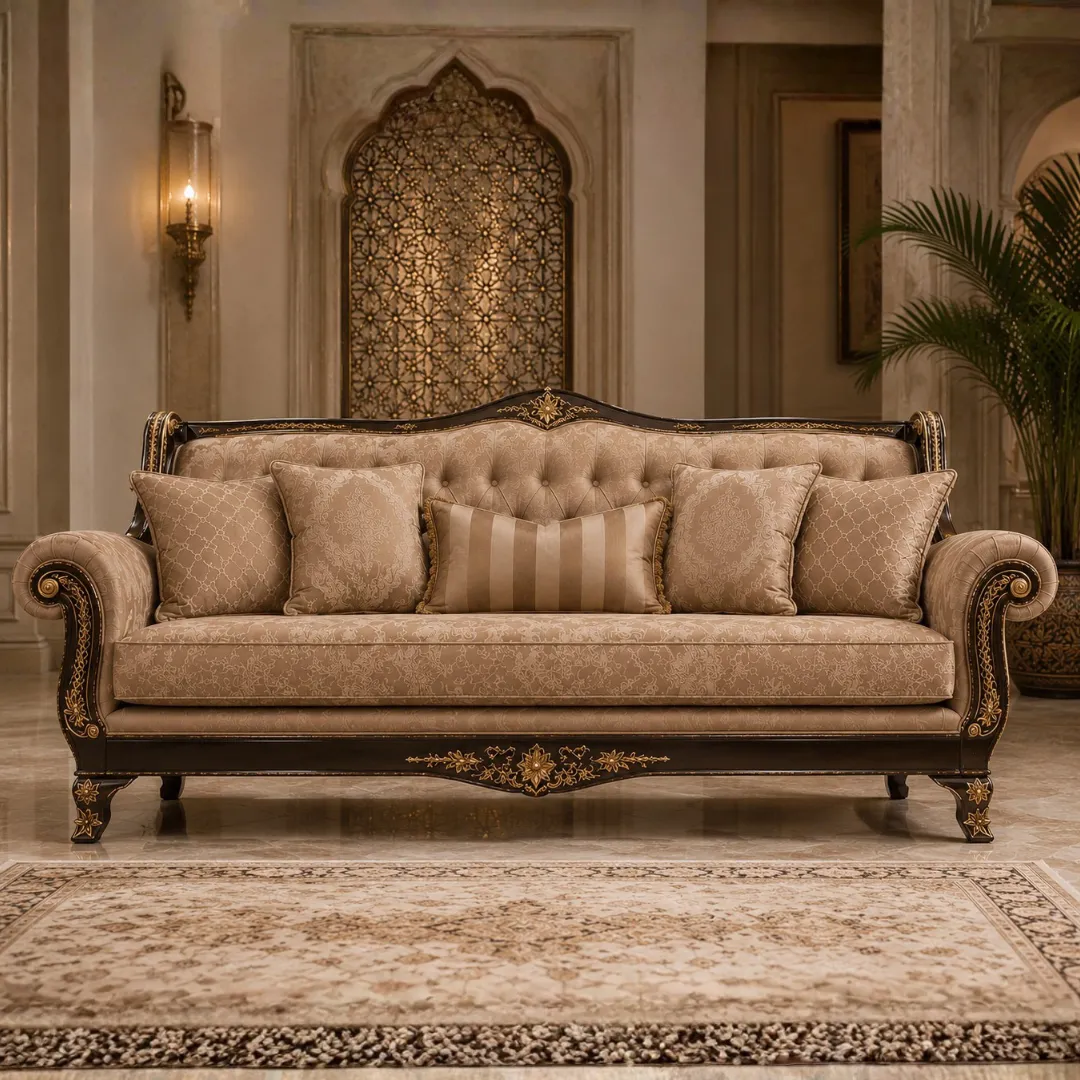
A wholesale furniture supplier is the right fit when its strongest collections match what your customers already buy. A store that sells formal, traditional rooms needs a vendor that goes deep in that style, with living room sets, dining sets and matching accent pieces. A wide catalog with two traditional pieces in it does not help that store.
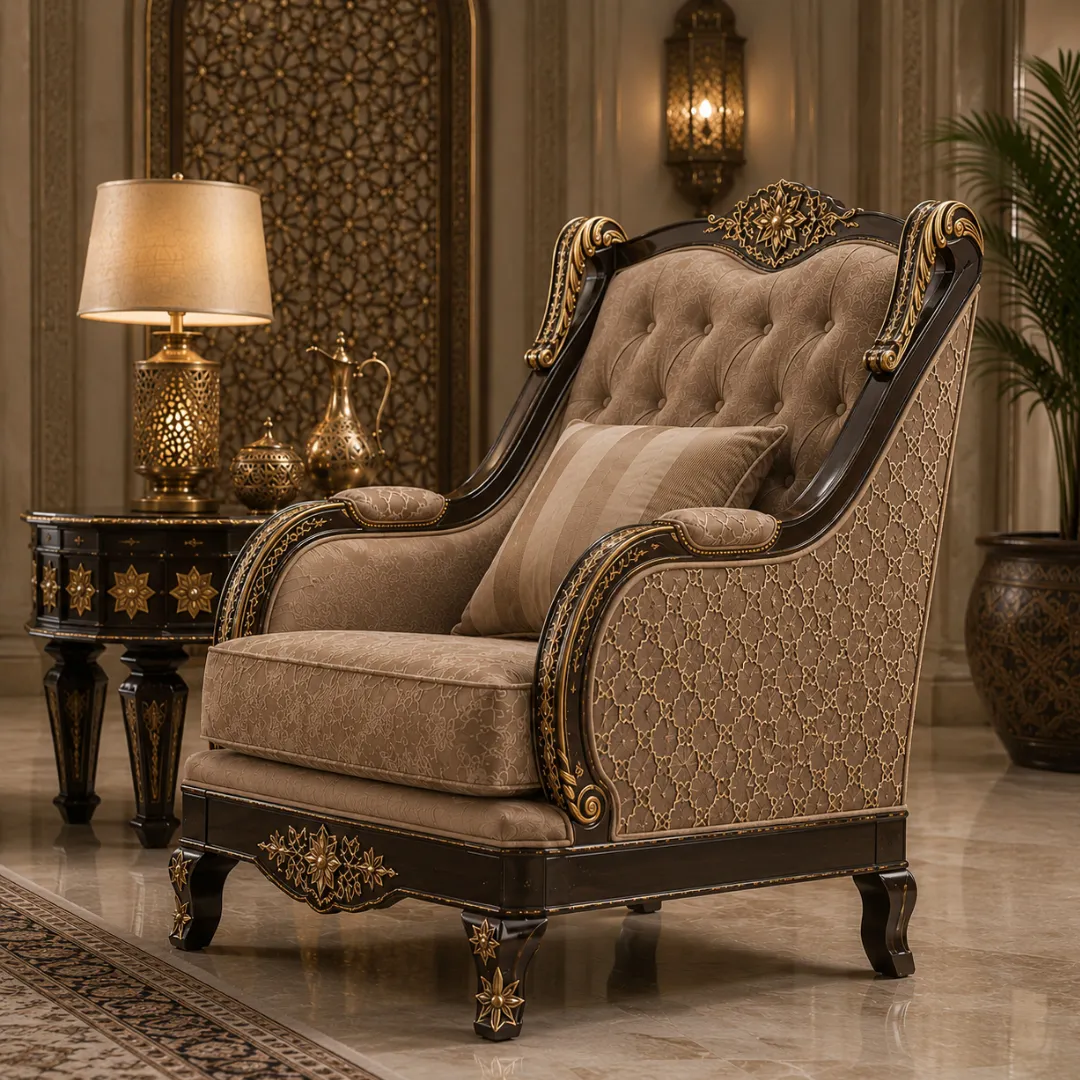
Look at how deep each collection goes. A living room collection that offers the sofa, loveseat and chair, plus matching coffee and end tables, lets you sell the whole room in one ticket. A single sofa with nothing around it sells as a single sofa.
The Balmoral collection shows what a deep collection looks like, with the set and its pieces listed separately:

If your floor leans classic, our guide to traditional, Victorian and European classic furniture explains how the three styles differ and which customer buys each.
3. Inspect the Construction
Construction decides your return rate. Check four parts of every upholstered piece and every case good, such as a buffet or a dining table, before you commit:
- Frame: solid wood or kiln-dried hardwood frames hold their shape. Ask what the frame is made of and where it is reinforced.
- Joinery: corner blocks, dowels and screws outlast staples alone. Turn a chair over and look.
- Seating: ask about cushion foam density and the spring system. Sit on the floor sample for more than ten seconds.
- Fabric and finish: rub the fabric, check pattern matching at the seams, and look at carved or painted trim under bright light.
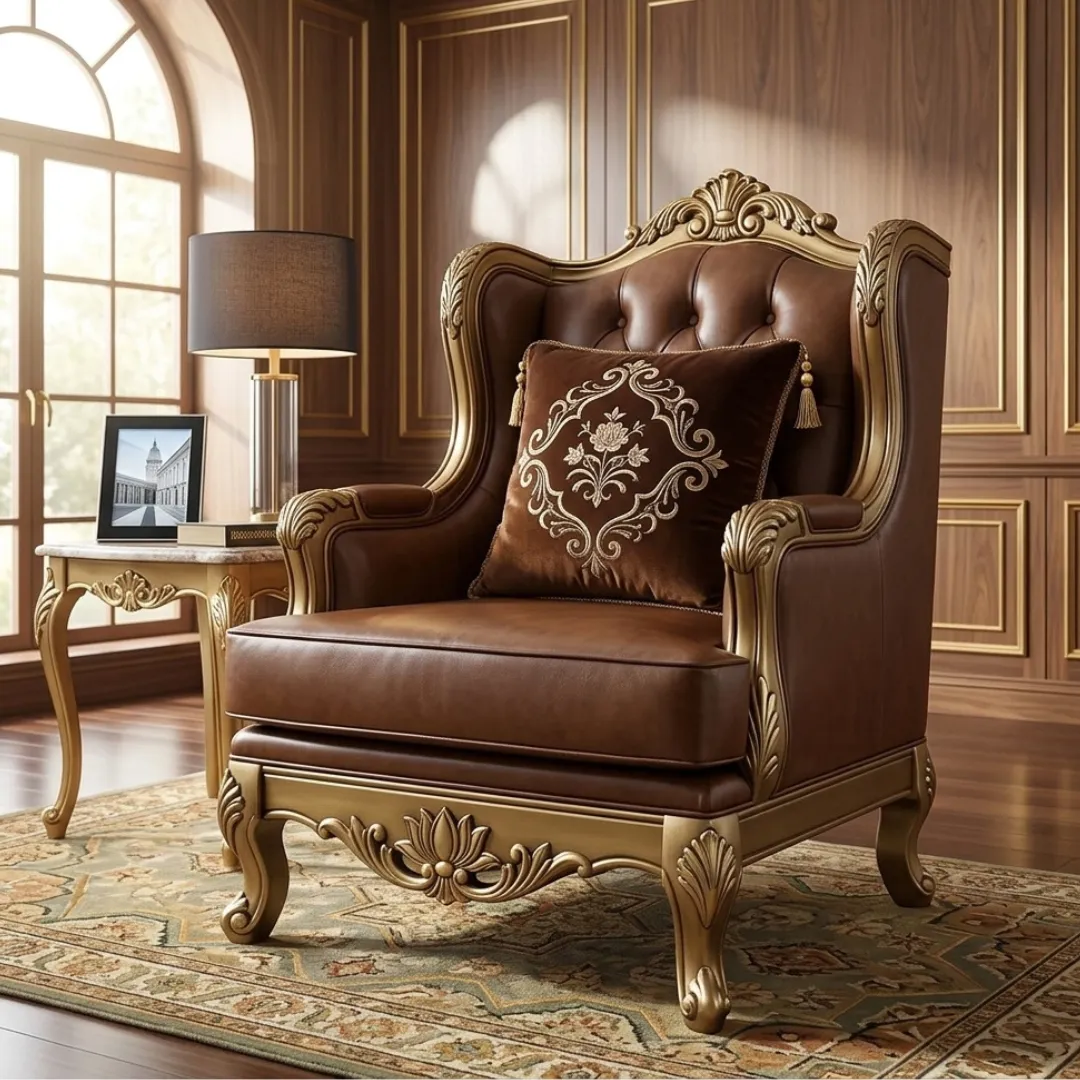
Photos hide all four. Visit the showroom, see the line at a furniture market, or order one set for your floor before you order ten for your warehouse. The two groups are checked in different ways: our guide to case goods vs. upholstery has the full checklist for each.
4. Ask About Minimums and the Opening Order
The minimum order quantity (MOQ) is the smallest order a supplier accepts. Wholesale suppliers set it in one of three ways: a dollar amount per order, a number of pieces, or a full container. Many suppliers also set a larger minimum for the opening order than for reorders.
A low minimum lets you test a collection with one set. A container minimum gives a lower price per piece, and it ties up cash and warehouse space for months. Choose the terms that fit your sales volume today, and ask what changes as your volume grows.
5. Compare Landed Cost, Not List Price
Landed cost is what a piece costs you when it reaches your floor: wholesale price, plus freight, plus the cost of damaged or returned goods. Two suppliers with the same price sheet can differ by 10% or more in landed cost.
Work the margin backwards from your retail price. Many furniture retailers start from a keystone markup, which means the retail price is double the landed cost, and adjust up or down by category. Our guide to furniture markup works through the numbers. If a set cannot reach your target margin at a retail price your market accepts, the wholesale price is too high for your store, however good the furniture is.
Also ask whether the supplier publishes a suggested retail price or a minimum advertised price (MAP). A MAP policy stops other dealers from undercutting you online.
6. Confirm Stock Location and Lead Times
Where the inventory sits decides how fast you get paid. Suppliers ship in two ways, and many offer both.
| Domestic warehouse stock | Direct container | |
|---|---|---|
| Lead time | Days to a few weeks | Several months |
| Order size | One set or a few pieces | A full container |
| Price per piece | Higher | Lower |
| Cash tied up | Low | High |
| Best for | Special orders, testing new collections | Proven sellers at volume |
Ask how the supplier reports back-orders. A vendor that posts an expected arrival date for each out-of-stock item lets you quote your customer a real delivery date.
7. Understand Freight and Damage Claims
Furniture is heavy, bulky and easy to damage, so the claims process matters as much as the freight rate. Get the answers to these questions in writing:
- Who arranges the freight, and who pays for it?
- How many days do you have to report damage or missing parts?
- Does a claim need photos, the original packaging or a return authorization number?
- Does the supplier ship a replacement part, or does it replace the whole piece?
Inspect every delivery when it arrives and note damage on the delivery receipt before you sign. Most claim windows start on the delivery date.
8. Read the Return and Warranty Policy
A return policy tells you who carries the risk when something goes wrong. Look for a clear time limit, a stated restocking fee and a named contact for claims. Check whether the supplier stocks replacement parts, such as legs, cushions and hardware, because a replacement part saves a sale that a refund loses.
Vague terms are a warning. “Contact us for details” is acceptable for pricing. It is not acceptable for returns.
9. Look at the Selling Support
A good wholesale furniture supplier helps you sell. Before you sign, ask for:
- product photos you may use on your website and in ads;
- dimensions, materials and assembly details for every piece;
- notice of new collections before they reach other dealers;
- a named sales contact who answers the phone during business hours.
Some suppliers also protect territories, which means they limit how many dealers carry a line in one area. If exclusivity matters in your market, ask what sales volume it requires.
12 Questions to Ask a Wholesale Furniture Supplier
- Do you sell to consumers anywhere?
- What documents do you need to approve my account?
- What is the minimum opening order, and the minimum reorder?
- What are the frames made of?
- Can I see or buy a floor sample first?
- Where is your stock, and what is the lead time today?
- How do you report back-orders?
- Who arranges and pays for freight?
- How long do I have to report damage?
- Do you stock replacement parts?
- Do you have a MAP policy?
- Who is my contact after the sale?
The 9 checks and the question list cover the decision itself. The next section answers the questions retailers ask around it.
Frequently Asked Questions
What is the difference between a furniture wholesaler and a manufacturer?
A manufacturer builds the furniture. A wholesaler buys from one or more factories, holds stock and sells it to retailers in smaller quantities. Buying from a wholesaler means lower minimums and faster delivery from domestic stock. Buying direct from a factory means lower prices per piece and full-container orders.
How many furniture suppliers should one store have?
Most independent stores do best with a small core group, about 3 to 6 suppliers, each strong in one style or category. Fewer suppliers means larger orders with each one, which improves your terms. More suppliers gives variety, and it spreads your buying too thin to earn volume pricing.
What is a MAP policy?
MAP stands for minimum advertised price. It is the lowest price at which a supplier allows dealers to advertise a product. A MAP policy does not fix the price you charge in the store. It stops other dealers from advertising the same piece below a set level, which protects your margin online.
Can I visit a supplier before I open an account?
Yes, with most suppliers. Trade-only showrooms ask for proof that you are in the furniture business, such as a business card and a resale certificate. A visit lets you check frames, finishes and fabrics in person, and it is the fastest way to judge how a supplier treats its retailers.
How Kleopatra Kingdom Answers the First Question
Kleopatra Kingdom is a trade-only furniture wholesaler in Arcadia, California. We do not sell to consumers. Wholesale pricing on our living room sets, sofas, loveseats and armchairs is shown only to approved accounts, and our team reviews every new account before it is activated.
Bring the other 11 questions to us directly, as you would with any wholesale furniture supplier: call +1 (909) 999-1442 or send us a message. If you are ready to apply, read how to open a wholesale furniture account first, so you have your documents on hand.