Case goods vs. upholstery is the basic division of the furniture trade: case goods are hard pieces built mainly from wood, such as buffets, dining tables and dressers, and upholstery is seating that is padded and covered in fabric or leather, such as sofas and accent chairs. The two groups are built, checked, shipped and displayed in different ways. This guide defines each group, compares them in one table, and then covers quality checks, shipping, and how to balance both on a showroom floor.
In short:
- Case goods: wood, metal or glass pieces with no padding. Customers judge them with their eyes and hands.
- Upholstery: a frame, a suspension, cushions and a cover. Customers judge it by sitting down.
- A complete room needs both, so retailers buy and display them together.
What Case Goods Are
Case goods are furniture pieces made of hard materials, with little or no upholstery. The name comes from the “case”, the box-shaped body that holds drawers, doors or shelves. Merriam-Webster defines case goods as furniture, such as bureaus or bookcases, that provides interior storage space.
The trade uses the term more widely than the dictionary does. In a wholesale catalog, case goods include storage pieces and also tables:
- Dining room: dining tables, buffets, china cabinets and servers.
- Bedroom: beds, dressers, chests, nightstands and mirrors.
- Living room: coffee tables, end tables, console tables and TV stands.
Most case goods are wood or wood veneer over an engineered core. Metal, glass and stone tops belong to the same group.
What Upholstery Is
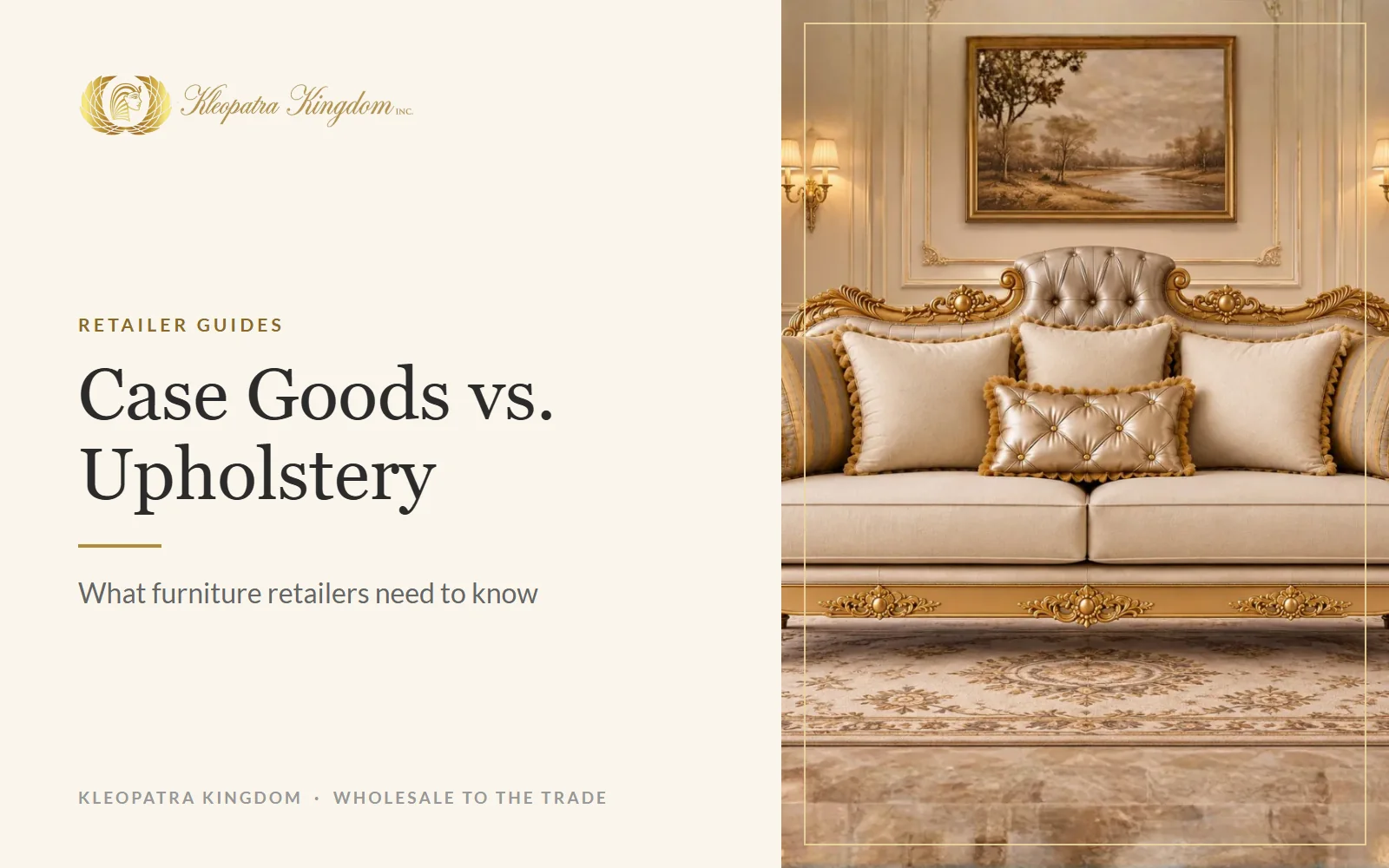
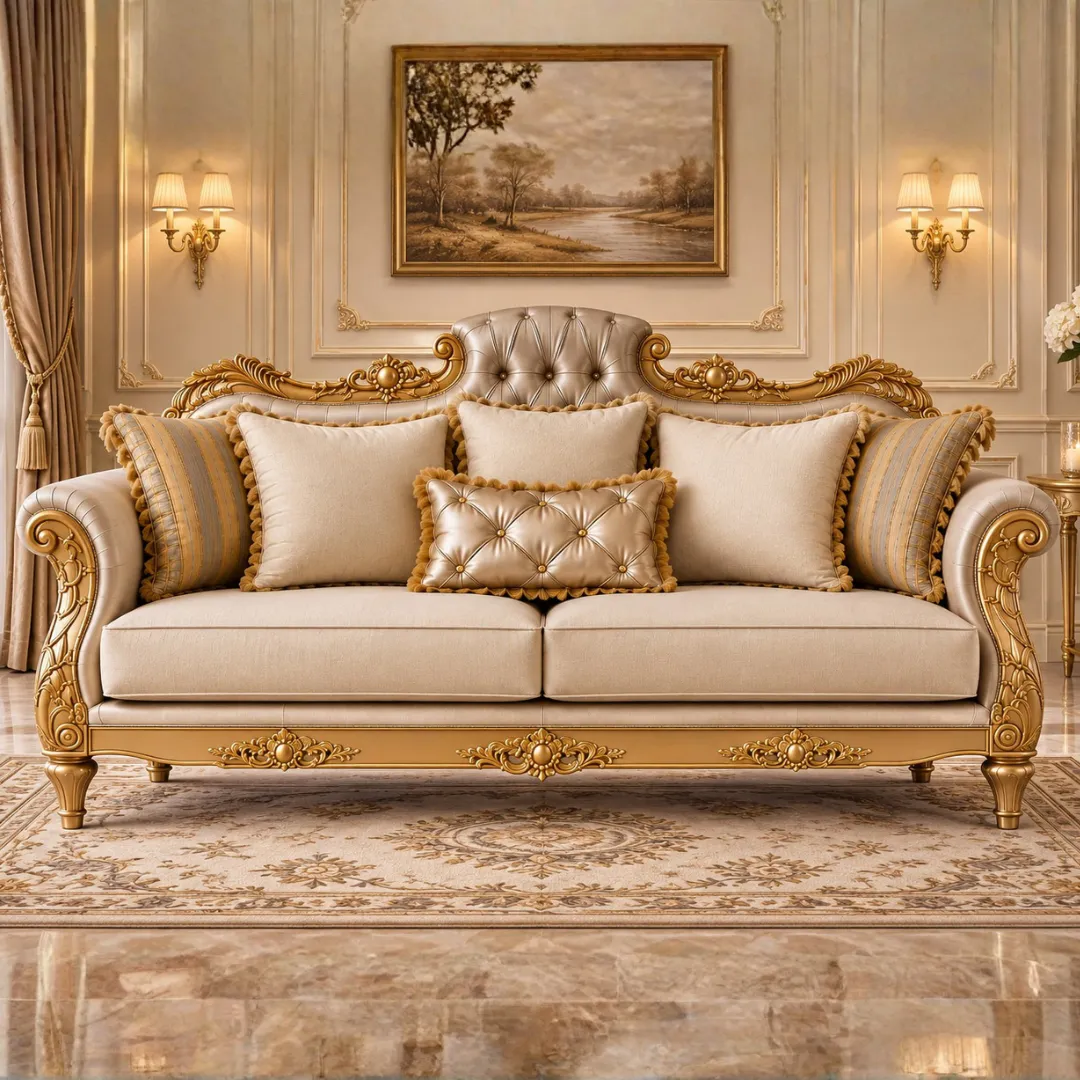
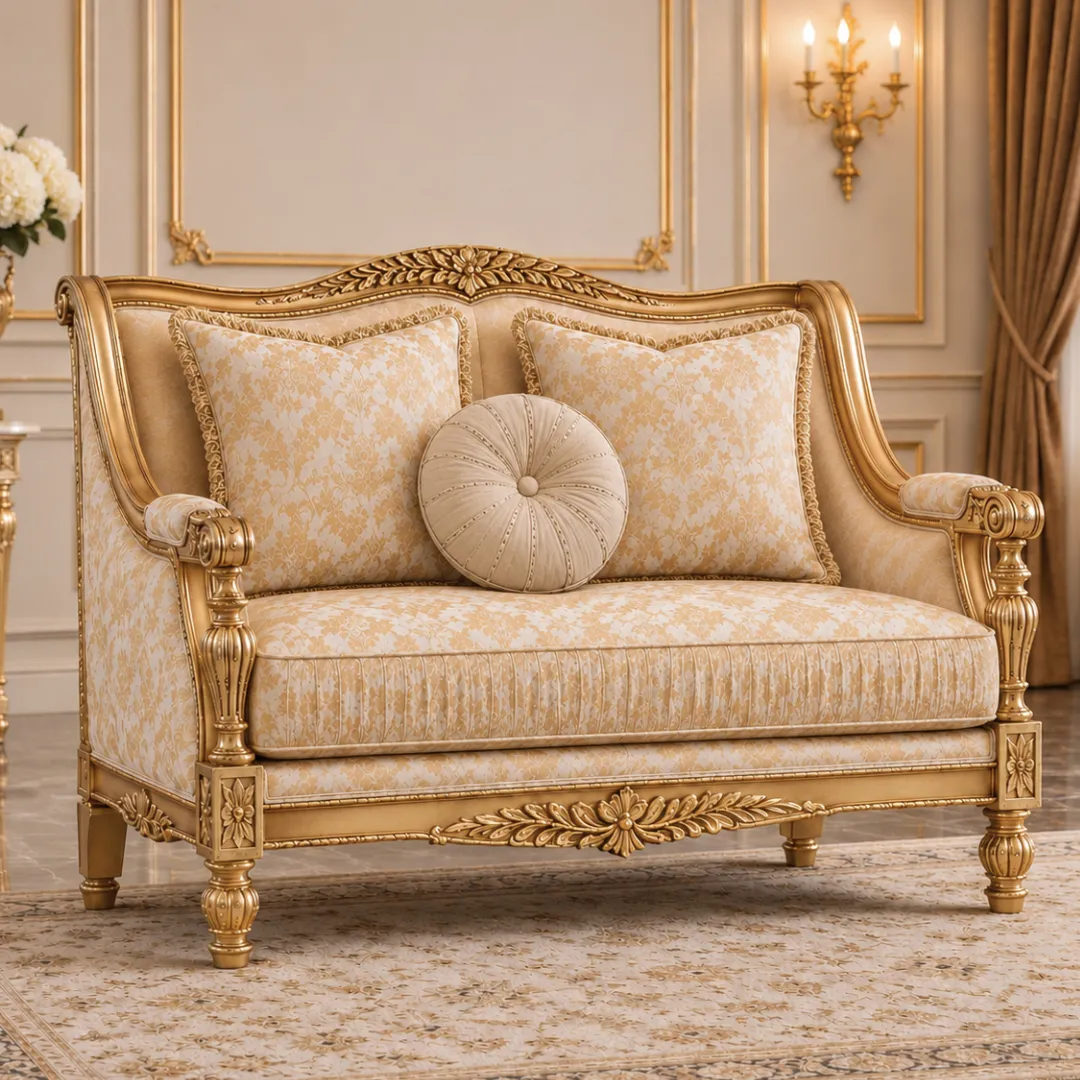
Upholstery is furniture with a padded seat and back under a fabric or leather cover. Every upholstered piece has 4 layers: a frame, a suspension that supports the seat, cushioning, and the cover.
The group includes sofas, loveseats, armchairs, accent chairs, benches and ottomans. A living room set of a sofa, a loveseat and a chair is the largest upholstery ticket in most furniture stores.
Case Goods vs. Upholstery at a Glance
| Case goods | Upholstery | |
|---|---|---|
| Main materials | Solid wood, veneer, engineered wood, metal, glass | Wood frame, springs or webbing, foam, fabric or leather |
| Examples | Buffets, dining tables, dressers, console tables | Sofas, loveseats, accent chairs, benches |
| How customers judge it | Finish, drawers, weight | Comfort, fabric feel, tailoring |
| What is hidden | Core material, back panels, drawer joints | Frame, suspension, foam |
| Typical shipping damage | Scratches, chipped corners, cracked tops | Torn or soiled covers, broken legs |
| Assembly | Often shipped knocked down (KD) | Usually assembled; legs or backs may detach |
| Repair after sale | Touch-up kits, replacement hardware | Replacement cushions, covers or legs |
How to Check Case Goods Quality
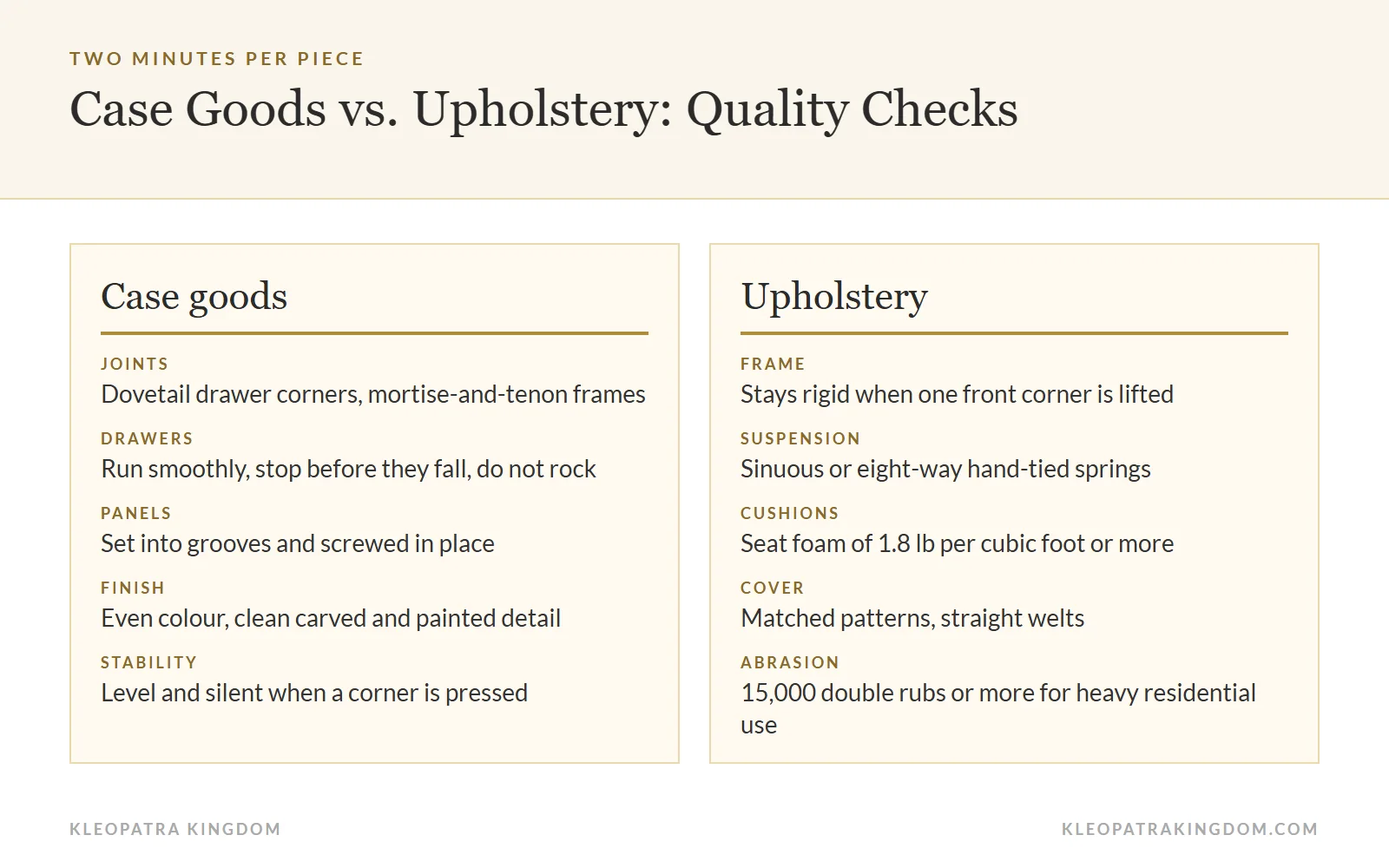
Check case goods in the places a customer does not look first: the joints, the drawers, the back and the underside. These 5 checks take two minutes per piece:
- Joints: dovetail joints on drawer corners and mortise-and-tenon joints on frames outlast staples and glue alone.
- Drawers: pull each drawer fully out. It runs smoothly on its glides, stops before it falls, and does not rock from side to side.
- Back and bottom panels: panels set into grooves and screwed in place keep the case square. Thin panels held by staples let it rack.
- Finish: look across the top against the light. The color is even, and carved or painted details are clean at the edges.
- Stability: press down on one corner. The piece stays level and silent.
Ask the supplier which parts are solid wood and which are veneer. Veneer over a stable core is normal on wide tops, because it resists warping. What matters is that the description on your tag is accurate.
How to Check Upholstery Quality
Check upholstery from the inside out, because the cover hides the parts that fail first. Go through the 4 layers in order:
- Frame: lift one front corner of a sofa about 6 inches. The other front leg rises with it on a rigid frame. If it stays on the floor, the frame twists. Hardwood frames with blocked corners are the standard to ask for.
- Suspension: sinuous (S-shaped) springs and eight-way hand-tied springs both give lasting support. Press along the seat deck: the support feels even from arm to arm.
- Cushions: ask for the foam density. Seat foam of 1.8 pounds per cubic foot or more keeps its shape longer than lighter foam.
- Cover: patterns line up at the seams, welts run straight, and the fabric has a stated abrasion rating. On the Wyzenbeek test, 15,000 double rubs or more is rated for heavy residential use.
Then sit on the piece. A seat that feels right for ten seconds and wrong after two minutes will come back as a complaint.
How Each Group Ships and Stores
Case goods and upholstery need different handling from the dock to the customer’s home.
- Case goods are heavy and rigid. Many arrive knocked down (KD), which means flat-packed for assembly at the store or in the home. KD cartons stack well and cut freight cost. Open each carton on delivery and check tops and corners before you sign.
- Upholstery is light for its size and takes up warehouse space. It is wrapped, not boxed, so covers are exposed to dirt and tears. Store it off the floor and never stack sofas on their arms.
Report damage inside the supplier’s claims window for both groups. Our guide to choosing a wholesale furniture supplier lists the questions to ask about freight and claims before the first order.
How to Balance Both on the Showroom Floor
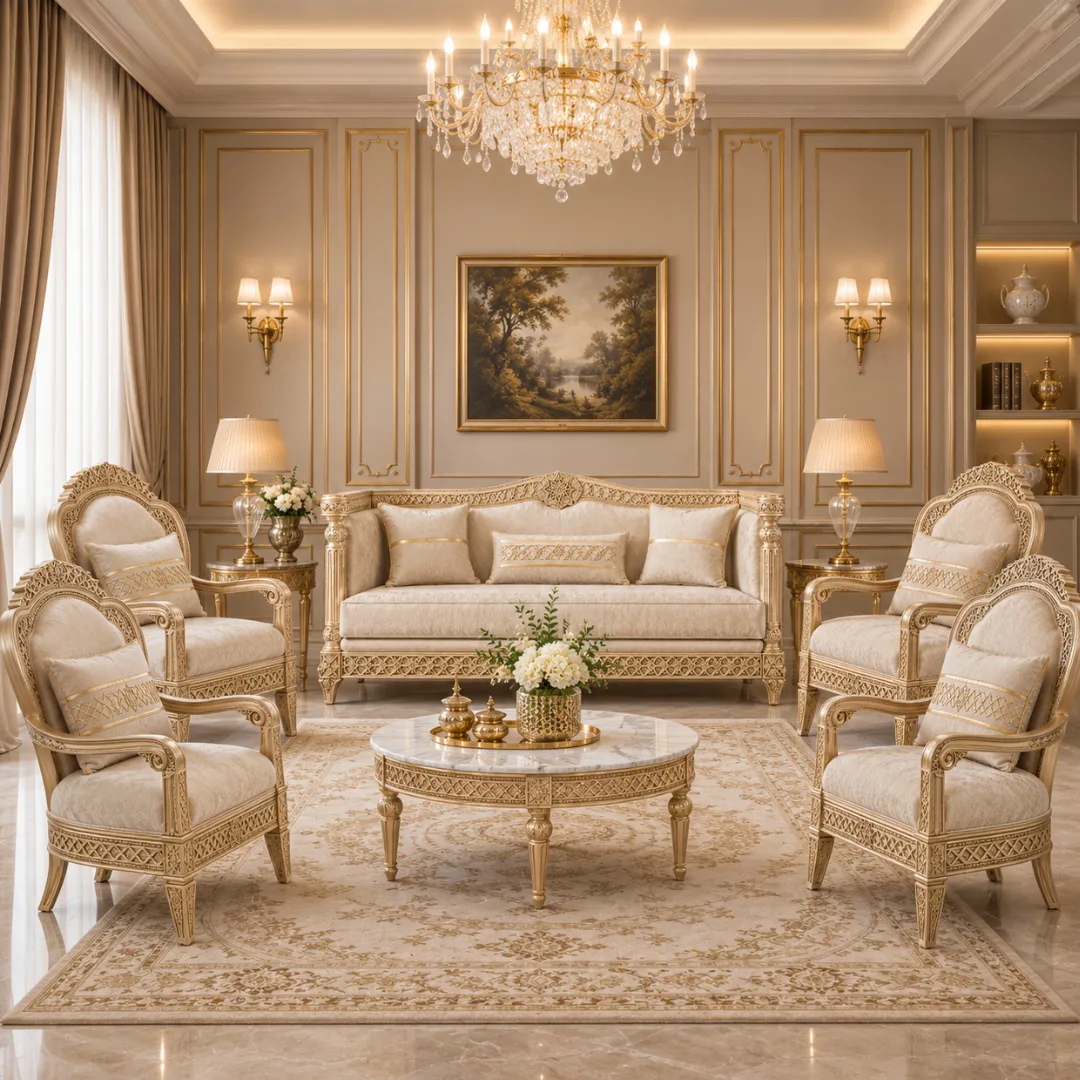
Display case goods and upholstery together, because customers buy rooms. Each room on your floor uses the two groups in a different proportion:
| Room | Upholstery | Case goods |
|---|---|---|
| Living room | Sofa, loveseat, chair | Coffee table, end tables, console table |
| Dining room | Seats of the dining chairs | Dining table, chair frames, buffet, china cabinet |
| Bedroom | Headboard on upholstered beds, bench | Bed, dresser, mirror, nightstands, chest |
In a living room the upholstery is the main purchase and the tables are the add-on. In a dining room it is the reverse: the table leads, and the buffet is the add-on that completes the room. Plan your buying the same way, so that every set on the floor has its matching pieces beside it. Our guide to furniture showroom layout covers where each piece stands.
Those sections cover the two main groups. The trade uses two more terms that sit between them.
Where Occasional and Accent Furniture Fit
Occasional furniture and accent furniture are categories by use, not by construction. Occasional tables, such as coffee, end and console tables, are case goods. Accent chairs and benches are upholstery. Wholesalers group them separately because retailers buy them to complete a room that is already sold.
Frequently Asked Questions
Is a dining table a case good?
Yes, in trade usage. A dining table has no storage, so it does not match the dictionary definition. Wholesalers and retailers still class it with case goods, because it is a hard, wood-built piece that is made, finished and shipped the same way as a buffet or a dresser.
Are dining chairs case goods or upholstery?
Dining chairs are sold with case goods even when the seat is padded. They are part of the dining set, they are built in the same finish as the table, and they ship in cartons with it. Fully upholstered host chairs are the exception and are sometimes listed with upholstery.
Is a bed a case good?
A wood bed is a case good and is sold with the bedroom set: dresser, mirror, nightstands and chest. A bed with a padded headboard and rails is often called an upholstered bed. Retailers still display it with the bedroom case goods it matches.
What does KD mean in a furniture catalog?
KD means knocked down. The piece ships disassembled in a flat carton and is put together at the store or in the customer’s home. KD reduces freight cost and shipping damage. A catalog line such as “KD: Yes” tells you to plan assembly time before delivery.
Buy Both From One Collection
The case goods vs. upholstery split explains how furniture is made and checked, and a showroom sells best when the two come from one collection in one finish. Kleopatra Kingdom supplies retailers with upholstered living room collections on carved beech wood frames: sets, sofas, loveseats and armchairs. Browse the wholesale furniture catalog, then open a trade account to see pricing.